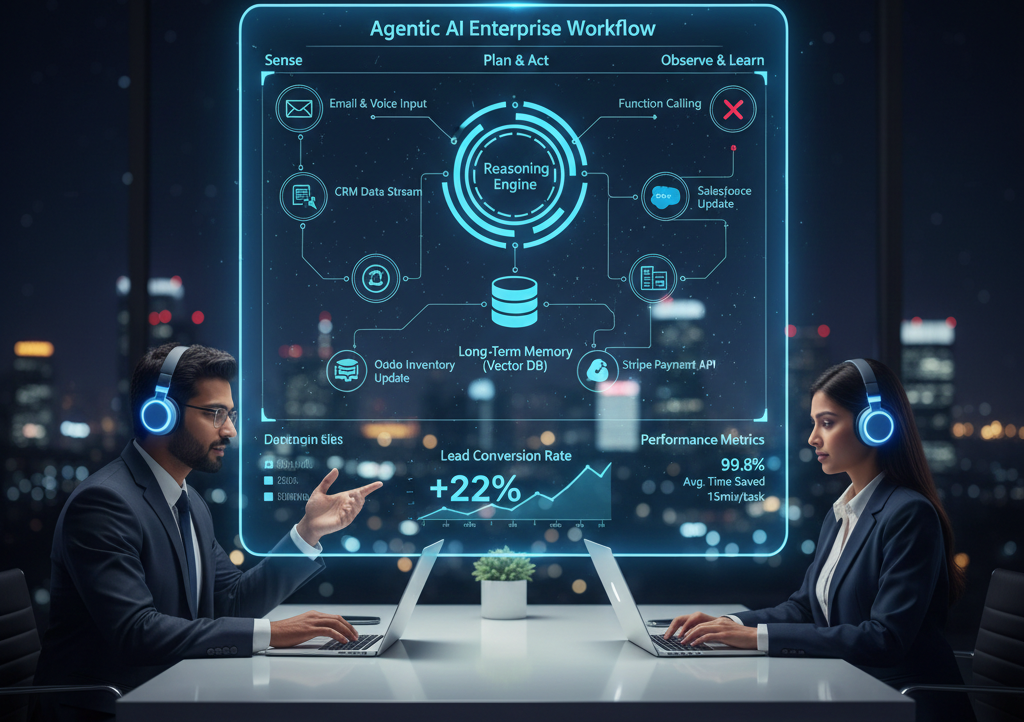
In 2026, the phrase “AI-powered” has taken on a new meaning. We have moved past simple generative responses into the era of Agentic AI. Unlike traditional automation that follows rigid “if-then” rules, Agentic AI uses reasoning, memory, and tool-access to achieve complex business goals autonomously.
For clients of Ksolves India Limited, this shift represents a move from software that assists to a digital workforce that executes.
What is Agentic AI? (The 2026 “Doer” Model)
Agentic AI refers to systems that can plan, decide, and act. If you tell a traditional AI to “organize a meeting,” it gives you a checklist. An Agentic AI system will check your calendar, email the participants, negotiate a time, book the Zoom room, and send a pre-read document—all without you lifting a finger.
Core Differences: Traditional vs. Agentic AI
| Feature | Traditional Automation | Agentic AI (2026) |
| Logic | Fixed “If-This-Then-That” | Dynamic Reasoning & Planning |
| Input | Structured Data Only | Unimodal & Multimodal (Voice/Text/Logs) |
| Action | Triggers a Single Event | Executes Multi-step Workflows |
| Learning | Static / Manual Updates | Continuous Feedback Loops |
Enterprise Use Cases: From Theory to Execution
1. Intelligent Customer Service (The Vapi Edge)
Using frameworks like Vapi AI, enterprises are deploying voice agents that handle entire insurance claims or technical support tickets. These agents don’t just answer FAQs; they access your Odoo ERP to check inventory, process refunds in Stripe, and update the Salesforce record simultaneously.
2. Autonomous Sales & Lead Nurturing
Agentic AI acts as a 24/7 Sales Development Representative (SDR). It can scan LinkedIn for intent signals, draft personalized outreach, and handle initial objections. Ksolves’ integration of these agents into CRM stacks has shown to reduce lead response time from hours to under 45 seconds.
Place Your Ad on aipromptviral.com
Directly chat with us to book this space and grow your brand visibility.
 Chat on WhatsApp
3. Supply Chain & Logistics Orchestration
Agents now monitor global weather patterns and port delays. If a shipment is flagged for delay, the AI agent autonomously reroutes the cargo, notifies the customer, and adjusts the production schedule in the factory to minimize downtime.
Why Ksolves is the Leader in Agentic Implementation
Implementing Agentic AI requires more than just an API key; it requires Orchestration. As a CMMI Level 3 company, Ksolves specializes in:
- Agent Blueprinting: Defining the guardrails and “tools” (APIs) an agent can use.
- Shadow Mode Testing: Running agents alongside humans to ensure 100% accuracy before full autonomy.
- Governance-as-Code: Embedding security policies directly into the agent’s logic to ensure HIPAA and PCI compliance.
“In 2026, the competitive advantage isn’t who has the best AI model, but who has the best-orchestrated agentic workflow.” — Ksolves Engineering Team