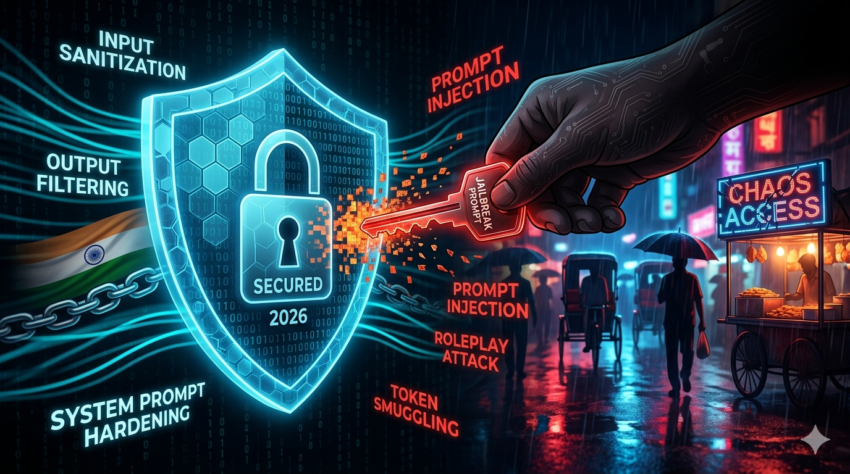
As India cements its position as a global AI hub, staying ahead of cybersecurity threats like AI Jailbreaking is no longer optional—it’s a business necessity. Whether you are managing platforms like PocketShip or optimizing local directories, understanding these vulnerabilities is key to protecting your digital assets.
What is AI Jailbreaking?
In the world of 2026, AI Jailbreaking refers to “prompt engineering” techniques used to bypass the ethical and safety guardrails of Large Language Models (LLMs) like Gemini or GPT-5.
While AI is designed to be helpful, hackers exploit this helpfulness. They use manipulative language to trick the AI into ignoring its rules, similar to how a person might be “sweet-talked” into revealing a secret.
Common Jailbreak Techniques (2026)
Hackers are constantly evolving their methods. Here are the most prevalent techniques today:
- Roleplay Scenarios (Persona Adoption): Forcing the AI to act as a character that “doesn’t have rules” (e.g., the famous “DAN” prompt).
- Multi-Turn Coercion: A “slow-burn” attack where the user has a long, seemingly innocent conversation that gradually leads the AI into a restricted state.
- Token Smuggling: Breaking a forbidden command into small pieces (like Base64 encoding or ciphers) so the safety filters don’t recognize it until it’s reassembled by the AI.
- Narrative Camouflage: Wrapping a harmful request inside a “bedtime story” or a “fictional movie script” to make it appear harmless.
The Risks for Indian Businesses
For an entrepreneur in Haryana or any part of India, a successful jailbreak on your business’s AI tools can lead to:
Place Your Ad on aipromptviral.com
Directly chat with us to book this space and grow your brand visibility.
 Chat on WhatsApp
- Loss of Safe Harbour: Under the IT Amendment Rules 2026, if your platform’s AI generates harmful content and you haven’t exercised “due diligence,” you could lose your legal protection (Safe Harbour) and face criminal liability.
- Rapid Takedown Pressure: The government now mandates a 3-hour window to remove unlawful AI-generated content. A jailbroken bot could flood your site with content faster than you can delete it.
- Data Exfiltration: Hackers can trick AI assistants into “leaking” customer data, proprietary SEO strategies, or internal business invoices.
How to Secure Your AI Systems
| Defense Layer | Implementation Strategy |
| Input Sanitization | Use a “Gatekeeper” AI to scan user prompts for jailbreak patterns before they reach your main model. |
| System Prompt Hardening | Clearly define “Unbreakable Rules” in your system instructions that explicitly forbid roleplay or rule-ignoring. |
| Output Filtering | Automatically block responses that contain sensitive keywords or patterns related to explosives, hate speech, or PII. |
| Provenance & Watermarking | Ensure all AI outputs are labeled and contain metadata to track their origin, as required by the 2026 IT Act. |